
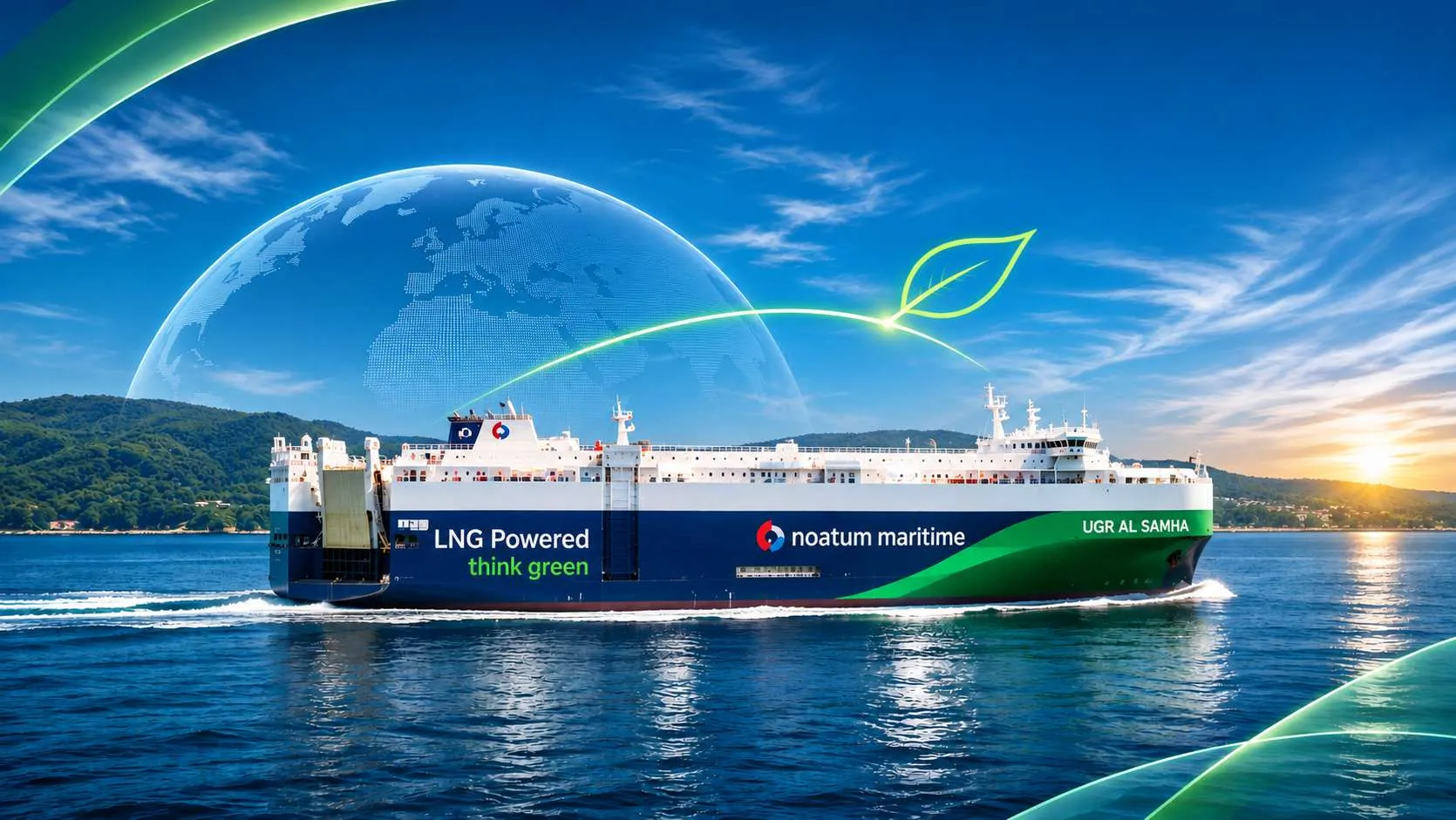
Green Shipping Corridors: What They Are and Why They Matter?
Shipping carries the vast majority of world trade, and with that role comes a significant share of global greenhouse gas emissions. As governments, regulators, and cargo owners push the industry toward net zero, the question is no longer whether maritime transport will decarbonize, but how quickly and on which routes the change will begin. One of the most practical answers to that question is the concept of green shipping corridors.
Rather than waiting for zero-emission technologies to be adopted everywhere at once, green corridors focus effort on specific trade routes where ports, shipowners, fuel producers, and cargo owners can work together to make cleaner shipping a commercial reality. This article explains what green shipping corridors are, how they work, and why they matter for the future of global trade and vehicle logistics.
What Are Green Shipping Corridors?
A green shipping corridor is a specific maritime route between two or more ports where zero-emission or low-emission shipping solutions are developed, tested, and scaled. The idea gained international momentum with the Clydebank Declaration, signed at the COP26 climate conference in 2021, in which a group of countries committed to supporting the creation of such corridors. Since then, the number of initiatives has grown steadily, with more than 80 corridor projects identified worldwide by the end of 2025.
What makes a corridor "green" is not a single technology, but coordinated action along the entire route. Clean fuels must be available for bunkering at both ends, port infrastructure must support new vessel types, and shipping companies and cargo owners must commit to using the corridor. Concentrating these efforts on one route makes it far easier to overcome the challenges that would be difficult to solve across the global fleet all at once.
How Does a Green Corridor Work?
Most green corridors begin with a partnership between port authorities, shipping lines, energy companies, and governments. The partners assess the route's traffic, cargo types, and fuel options, then develop a roadmap covering fuel supply, vessel deployment, port investments, and regulatory support. Cargo owners often play a key role by signaling demand for low-emission transport, which gives shipowners and fuel producers the confidence to invest.
Over time, the corridor moves from feasibility studies to pilot sailings and, ultimately, to regular commercial operations. Lessons learned on one route can then be applied to others, helping the industry build a wider network of sustainable shipping lanes.
Why Green Shipping Corridors Matter for Global Trade?
Green corridors matter because they turn long-term climate targets into concrete, measurable action. For an industry built on long vessel lifecycles and complex international supply chains, they offer a way to test new solutions under real operating conditions while sharing risks and costs among multiple stakeholders.
Regulatory Pressure and the Path to Net Zero
Maritime decarbonization is increasingly shaped by regulation. The International Maritime Organization has set the goal of reaching net-zero greenhouse gas emissions from international shipping by or around 2050, and member states continue to negotiate the global measures needed to achieve it. At the regional level, shipping has been included in the EU Emissions Trading System, while the FuelEU Maritime regulation sets requirements for the greenhouse gas intensity of energy used on board vessels calling at European ports.
In this environment, green corridors give the industry a head start. Operators and ports that gain early experience with alternative fuels and new technologies will be better prepared as regulations tighten and compliance becomes a standard part of doing business.
Growing Expectations from Cargo Owners
Regulation is not the only driver. Manufacturers, retailers, and logistics buyers are setting their own emission reduction targets, and the transport of their goods is part of the footprint they are expected to measure and reduce. As a result, cargo owners increasingly look for carriers that can provide emissions data, offer lower-carbon transport options, and support their sustainability reporting. Green corridors help create the conditions for these options to become widely available.
The Building Blocks of a Green Corridor
Every green corridor depends on a combination of fuels, infrastructure, vessels, and data. On the fuel side, options such as green methanol, ammonia, hydrogen-based fuels, and sustainable biofuels are being explored, each with its own advantages and challenges in terms of cost, availability, and safety. Some corridors also use transitional solutions that reduce emissions while zero-emission fuels are scaled up.
Ports are equally important. Bunkering facilities for new fuels, onshore power supply that allows vessels to switch off their engines at berth, and efficient terminal operations that reduce waiting times all contribute to lower emissions along the route. On board, energy efficiency measures such as optimized hull designs, speed management, and improved voyage planning help cut fuel consumption regardless of the fuel being used. Finally, transparent emissions monitoring and reporting allow all partners to track progress and verify results.
What Green Corridors Mean for Ro-Ro and Automotive Logistics?
For roro shipping, green corridors are closely linked to the transformation of the automotive industry itself. Automakers are investing heavily in electric and low-emission vehicles, and many are extending their climate targets to the supply chains that deliver those vehicles to market. Shipping a fleet of electric cars on a high-emission voyage sits uneasily with that commitment, which is why sustainable automotive logistics is becoming a priority for manufacturers and distributors alike.
Ro-Ro trade lanes also tend to be regular, high-volume routes between production hubs and destination markets, which makes them strong candidates for corridor initiatives. Emerging manufacturing and export centers, including India, have begun to take part in green corridor projects, a development that complements the trade flows discussed in our article on connecting India to global automotive markets. As explored in our look at roro shipping in global trade, the routes that link new production hubs with consumer markets are becoming strategic arteries of the industry, and their environmental performance will matter more with every passing year.
For carriers, this means planning ahead: deploying a modern and efficient fleet, optimizing vessel utilization and routing, and working with port partners to reduce emissions throughout the logistics chain.
Challenges on the Road to Zero-Emission Shipping
Despite their promise, green corridors face real obstacles. Zero-emission fuels remain significantly more expensive than conventional marine fuels, and production capacity is still limited. Building new bunkering infrastructure and vessels requires large investments with long payback periods, and uncertainty around the timing of global regulations can make stakeholders hesitant to commit. Many corridor initiatives are therefore still at the feasibility or early implementation stage.
Overcoming these challenges requires close collaboration between governments, ports, energy providers, shipowners, and cargo owners. Policy support, long-term offtake agreements, and shared investment models are all helping to close the gap between ambition and commercial reality.
At UGR Lines, we follow these developments closely and believe that efficient, well-planned Ro-Ro operations are an important part of the move toward more sustainable shipping. Across our wider range of services, we work with customers to design logistics solutions that meet their operational needs today while preparing for the requirements of tomorrow. To discuss your shipping requirements and sustainability goals, please contact our team directly.