
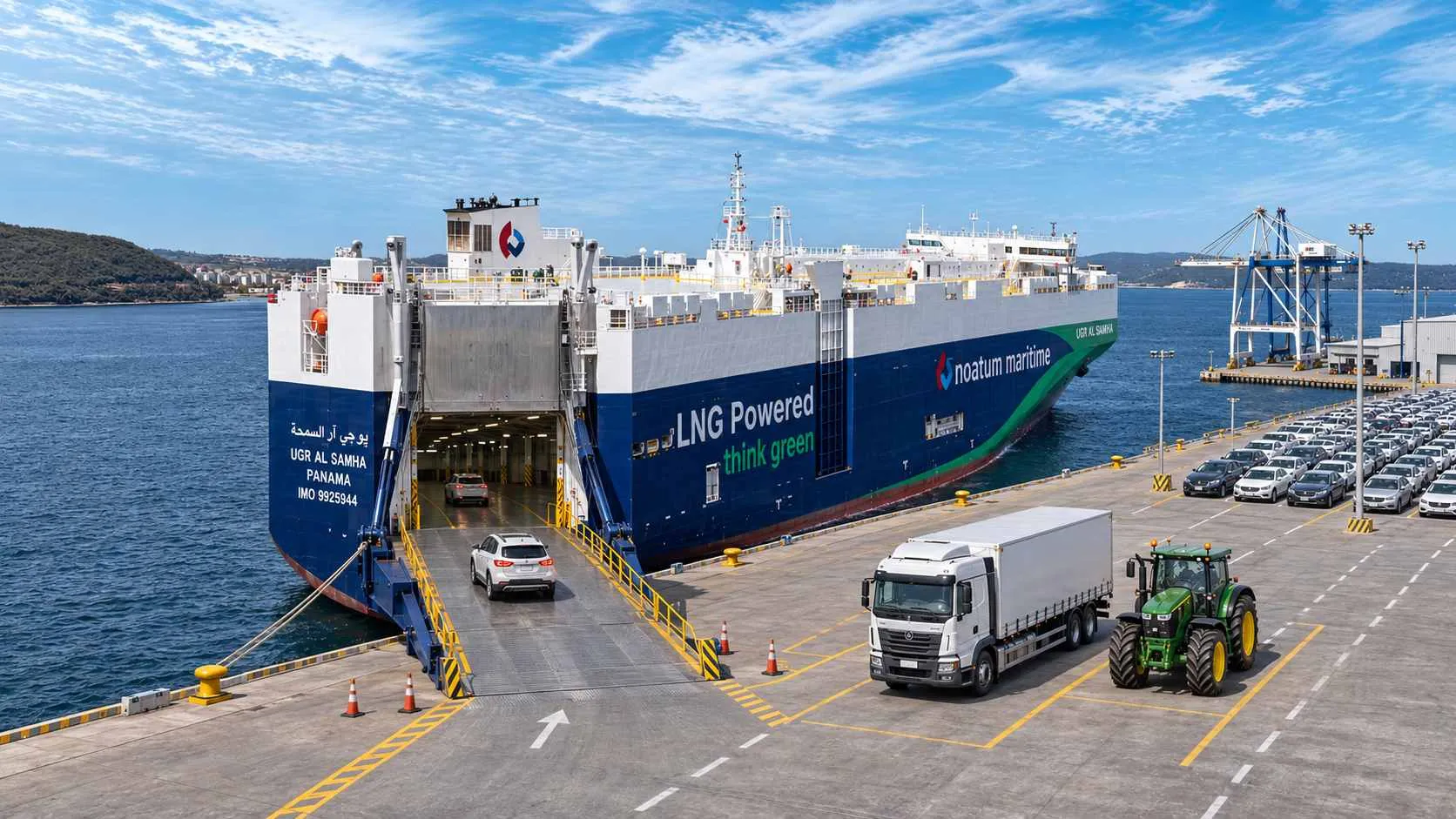
Connecting India to Global Automotive Markets: The Role of Ro-Ro Logistics
India has moved steadily from being primarily a domestic automotive market to becoming one of the world's most important vehicle production and export hubs. Global manufacturers now use Indian plants as regional and even global sourcing bases, while Indian automakers are expanding their presence in overseas markets. As export volumes grow, the ability to move finished vehicles reliably and efficiently across the sea has become a decisive factor in India's automotive success story.
Ro-Ro logistics sits at the center of this transformation. For manufacturers and exporters, choosing the right shipping partner on India's key trade lanes is no longer only a transport decision — it directly affects delivery times, market competitiveness, and the quality of every vehicle that reaches the customer.
India's Growing Automotive Export Industry
India automotive exports have grown on the strength of competitive manufacturing costs, a deep supplier base, and a large pool of engineering talent. Passenger cars, compact SUVs, two-wheelers, commercial vehicles, and tractors built in India are now shipped to markets across Africa, Latin America, the Middle East, and Europe. Several global automakers have designated their Indian plants as export hubs for specific models, which has turned consistent, high-volume outbound shipping into a structural requirement rather than an occasional need.
Government policy has reinforced this trend. Manufacturing incentive programs and a strong focus on export-led growth continue to encourage investment in vehicle and component production, including electric vehicles. As production capacity expands, so does the demand for dependable automotive logistics India can rely on: logistics chains that connect factories to ports, ports to vessels, and vessels to overseas distribution networks without delays or quality losses.
For exporters, this growth brings both opportunity and pressure. Overseas buyers expect predictable lead times and vehicles delivered in perfect condition, which places a premium on well-planned automotive logistics from the production line to the destination market.
Connecting India with Europe and the Middle East
Among India's many export destinations, Europe and the Middle East stand out for their volume, proximity, and long-term growth potential. Gulf markets import large numbers of passenger vehicles, pickups, buses, and construction machinery, and their relatively short sailing distance from India's west coast makes them a natural extension of Indian production. Middle Eastern ports also serve as transshipment points for cargo moving onward to Africa and other regional markets.
Europe represents a different but equally important opportunity. Compact cars and SUVs produced in India have found a strong customer base across European markets, and demand for vehicle shipping India to Europe continues to rise as manufacturers expand model line-ups and trade relations deepen. Because European buyers expect strict quality standards and reliable delivery windows, carriers serving this lane must combine regular capacity with careful cargo handling.
Both corridors reflect the broader shift explored in our look at roro shipping in global trade: new manufacturing hubs are reshaping vehicle flows, and the trade lanes connecting them are becoming strategic arteries of the global automotive industry.
The Advantages of Ro-Ro Shipping for Automotive Transport
For finished vehicles, Ro-Ro transport offers clear advantages over alternative methods. Vehicles are driven on and off the vessel under their own power, which removes the need for crane lifts, reduces handling steps, and significantly lowers the risk of damage. Loading and discharge operations are also faster, allowing large consignments to move through ports efficiently.
Ro-Ro shipping from India is also well suited to mixed cargo. Modern vessels with hoistable decks can carry passenger cars, vans, trucks, buses, and agricultural machinery on the same sailing, giving manufacturers the flexibility to combine different product lines in a single booking. A diversified fleet makes it possible to match each shipment to the right vessel type based on volume, cargo dimensions, and destination.
Cost efficiency is another key factor. Because Ro-Ro vessels are designed specifically for rolling cargo, they use deck space more effectively for vehicles than container or break bulk solutions, which helps keep per-unit transport costs competitive on high-volume export lanes.
Port and Terminal Infrastructure: Why It Matters
Even the best vessel schedule depends on the ports behind it. India's major vehicle export gateways on both the east and west coasts have invested in dedicated Ro-Ro berths, vehicle storage yards, and faster customs procedures, but capacity and efficiency still vary from port to port. Terminal performance directly affects how quickly vehicles move from the factory gate to the ship, how long they wait in storage, and how well they are protected before loading.
For exporters, choosing a carrier with established port relationships and strong terminal coordination is essential. Efficient yard management, well-organized pre-loading checks, and smooth coordination between terminal operators and ship crews reduce dwell times and help ensure that vehicles are loaded on schedule and in perfect condition.
Flexible, Tailor-Made Logistics Solutions for Indian Exporters
No two export programs are identical. A global automaker shipping thousands of units each month to Europe has very different requirements from a tractor manufacturer entering a new Middle Eastern market or a commercial vehicle producer delivering a one-off fleet order. Standardized, one-size-fits-all shipping rarely serves any of them well.
Tailor-made logistics solutions start with understanding the exporter's production schedule, cargo mix, and destination requirements, then building a transport plan around them. This may involve regular scheduled sailings for steady volumes, flexible capacity for seasonal peaks, or specialized handling for high and heavy units. Complementary services that support the wider logistics chain can further simplify the process by reducing the number of partners an exporter needs to coordinate.
For Indian manufacturers and exporters looking to strengthen their position in Europe and the Middle East, a reliable Ro-Ro partner is a strategic asset. UGR works closely with exporters to design shipping solutions that match their volumes, timelines, and quality expectations. To discuss your export plans or request a tailored logistics proposal, please contact our team directly.