The Growing Strategic Role of RoRo Shipping in Global Trade
For decades, roro shipping occupied a relatively predictable niche within international logistics: moving finished vehicles from factory to dealership along a handful of well-established routes. That picture has changed considerably. Rising vehicle exports from new manufacturing hubs, shifting trade alliances, and growing demand for rolling machinery and heavy equipment have pushed RoRo shipping in global trade from a specialized service into a strategic pillar of international commerce.
Understanding why this shift is happening — and which corridors are driving it — is essential for manufacturers, exporters, and logistics planners who need to build resilient, cost-efficient supply chains for the years ahead.
What Is Driving the Rise of RoRo Shipping in Global Trade?
Several converging forces explain why is RoRo shipping important to today's trade environment in a way it simply wasn't fifteen years ago. Global vehicle production has diversified beyond its traditional centers, export volumes of both passenger cars and heavy machinery have climbed steadily, and shippers increasingly favor RoRo's drive-on/drive-off efficiency over the added handling steps required by roro vs. container transport for wheeled cargo. Together, these dynamics have turned several regional trade lanes into critical arteries of the global economy.
China's Expanding Market and Its Effect on RoRo Demand
No single market has reshaped RoRo demand more than China. Chinese automakers have scaled export volumes at a pace the global vessel fleet has struggled to keep up with, particularly as electric vehicle production accelerates and manufacturers look to move finished units to overseas markets quickly and in bulk. This surge has tightened available RoRo tonnage worldwide, pushed freight rates upward, and encouraged shipowners to commission new vessels specifically sized for the Chinese export market. The ripple effects extend well beyond China's own trade lanes, influencing vessel availability and pricing on routes that have nothing directly to do with Chinese cargo.
The Far East–Middle East Corridor: A New Strategic Hub
The Far East–Middle East corridor has emerged as one of the fastest-growing RoRo lanes on the map. Gulf markets have become major import destinations for passenger vehicles, buses, and construction machinery, fueled by infrastructure investment and population growth across the region. At the same time, Middle Eastern ports are increasingly positioning themselves as transshipment hubs, allowing cargo bound for Africa and parts of Europe to move through the corridor efficiently. For carriers, this has meant deploying additional tonnage and adjusting rotations to serve a lane that barely warranted dedicated capacity a decade ago.
The Far East–Europe Route: Meeting Rising Export Volumes
The Far East–Europe route tells a similar story from a different angle. European demand for imported vehicles, agricultural equipment, and industrial machinery from Asian manufacturers has climbed steadily, while European exporters continue to rely on the same corridor to move machinery and vehicles in the opposite direction. The result is a two-way lane operating at consistently high utilization, where port congestion and vessel scheduling have become as important to shippers as freight rates themselves.
Why These Trade Lanes Matter for Manufacturers and Exporters?
For manufacturers and exporters, the growth of these corridors is not merely a shipping-industry curiosity — it directly shapes production planning, inventory strategy, and market entry timing. A manufacturer launching a new export market needs confidence that RoRo capacity will be available on the relevant corridor, at a predictable cost, and on a schedule that aligns with dealership or project delivery deadlines. Where that capacity is tight, as it currently is on several Asian export lanes, manufacturers face longer lead times and higher freight costs that must be factored directly into pricing and market strategy.
This is particularly true for exporters relying on specialized automotive logistics chains, where a single missed sailing can cascade into delayed vehicle registrations, storage costs, and contractual penalties. Choosing a carrier with reliable capacity on the right corridor has become as strategically important as the manufacturing process itself.
How Port Infrastructure and Fleet Capacity Are Adapting?
Rising cargo volumes have put visible pressure on both port infrastructure and vessel fleets. Ports along the busiest RoRo corridors are expanding dedicated ramp facilities, adding vehicle storage yards, and investing in faster customs processing to reduce dwell times. On the vessel side, shipowners are ordering larger PCTC tonnage with greater deck flexibility, in part to accommodate the growing mix of electric vehicles, which require different stowage and fire-safety protocols than conventional combustion vehicles.
This adaptation is not instantaneous. New vessels take years to design and build, and port expansions require significant capital investment and regulatory approval. As a result, capacity growth tends to lag several steps behind demand growth, which is precisely why freight rates on high-demand corridors have remained elevated even as new tonnage gradually enters service.
Sustainability and LNG-Powered Vessels in RoRo Growth
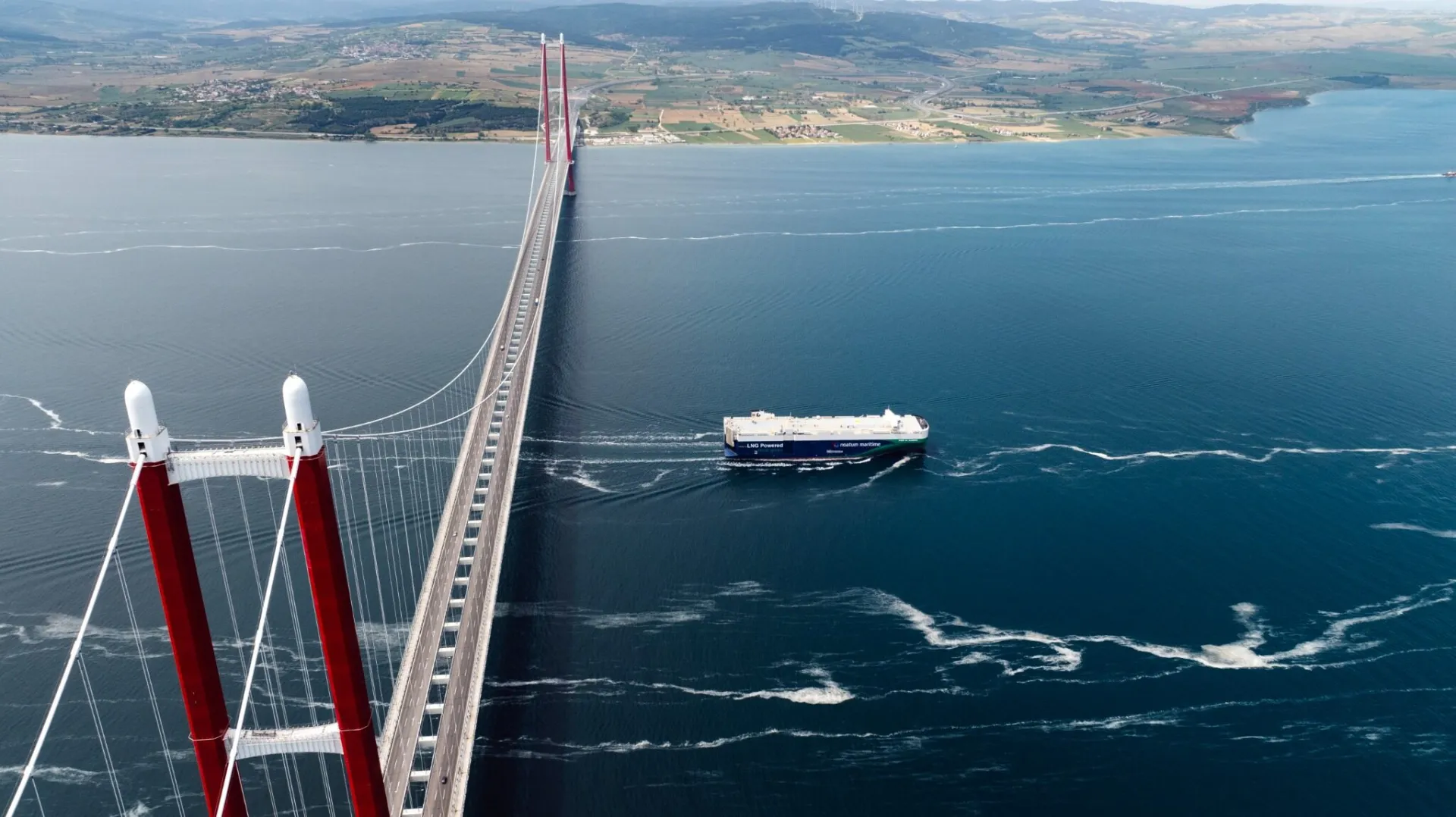
Environmental regulation is reshaping fleet investment alongside demand growth. International emissions standards have pushed shipowners toward LNG-powered vessels and other lower-emission propulsion systems as they renew and expand their fleets. LNG-fueled RoRo ships offer a meaningful reduction in sulfur oxide and particulate emissions compared to conventional heavy fuel oil vessels, and several major carriers have already committed newbuild orders to this technology.
For exporters, this shift carries practical implications beyond environmental compliance. Cleaner vessels are increasingly favored by ports with strict emissions zones, and manufacturers with their own sustainability commitments are beginning to factor a carrier's fleet composition into vendor selection. Sustainability, in other words, has moved from a peripheral concern to a competitive factor in RoRo procurement.
The Future Outlook for RoRo Shipping in Global Trade
The trajectory for RoRo shipping points toward continued growth, but also continued tightness. Export volumes from Asia show no sign of slowing, Middle Eastern and European demand remains robust, and fleet expansion — while underway — will take years to fully catch up with current demand. Electric vehicle exports, in particular, are expected to keep reshaping deck configurations and safety protocols across the industry as their share of global vehicle trade continues to rise.
For manufacturers and exporters navigating this environment, the priority is securing reliable capacity with a carrier that understands the strategic corridors driving global trade. UGR Lines operates across these key routes with a fleet built to serve the evolving demands of automotive and machinery exporters. To discuss capacity, scheduling, or corridor-specific logistics planning for your business, please contact our team directly.