Things to Know Before Shipping Your Vehicle Overseas
Navigating the complexities of global supply chains requires precise planning, especially when mobilizing high-value assets across international borders. For commercial enterprises, fleet managers, and automotive distributors, understanding the operational frameworks of maritime transport is critical. Successfully coordinating these logistics goes beyond simply booking space on a vessel; it demands strict adherence to international regulations, comprehensive documentation, and a thorough assessment of operational variables. This guide outlines the fundamental considerations, regulatory protocols, and strategic planning necessary for optimizing transoceanic vehicle transport.
Essential Documents You Will Need
The foundation of any successful international freight operation is accurate and complete documentation. Customs authorities operate under strict legal frameworks, and failing to meet the exact shipping a car overseas requirements can result in severe delays, impoundment, or rejection of the cargo at the port of origin or destination.
Compiling the correct car shipping documents is a mandatory administrative phase. While specific requirements can vary depending on the bilateral trade agreements between the origin and destination countries, standard documents needed to ship car overseas universally include:
● Original Certificate of Title: This proves clear ownership of the asset. If the vehicle is financed, a notarized letter of authorization from the lienholder permitting export is legally required.
● Bill of Sale: A commercial invoice detailing the transaction, the value of the vehicle, and the identification of both the buyer and seller. This is critical for customs valuation.
● Bill of Lading (BoL): The master contract between the shipper and the carrier. It serves as a receipt of freight, a contract of carriage, and a document of title.
● Export Declaration: Required by customs to monitor and record the outflow of goods, ensuring compliance with national export regulations.
● Valid Corporate or Personal Identification: Passports or Employer Identification Numbers (EIN) for corporate entities to verify the identity of the exporting party.
Preparing Your Vehicle: The Physical Checklist
Operational readiness is just as critical as administrative compliance. Maritime carriers enforce strict physical condition standards to ensure the safety of the vessel, the crew, and the surrounding cargo. Before a vehicle arrives at the terminal, a systematic physical preparation protocol must be executed.
Firstly, a comprehensive cleaning of the exterior and interior is necessary. This facilitates a precise pre-shipment inspection, allowing for the accurate logging of any pre-existing exterior damage. Secondly, all unauthorized cargo must be removed. Vehicles cannot be utilized as secondary shipping containers; cabins must remain entirely empty, with the exception of factory-issued safety equipment like spare tires and jacks.
Furthermore, fluid management is heavily regulated. Fuel tanks must be reduced to a maximum of one-quarter capacity to mitigate fire hazards, while all other systems (oil, coolant, hydraulics) must be inspected to ensure there are no active leaks that could compromise deck safety. Finally, electronic anti-theft systems must be completely disabled to prevent battery depletion during transit.
International Car Shipping Methods
Selecting the appropriate maritime transport architecture is a primary logistical decision. The industry standard generally relies on two primary methodologies, each serving different operational profiles.
Containerized shipping involves loading one or more vehicles into a standard 20-foot or 40-foot steel shipping container. This method offers an added layer of physical isolation and allows for the transportation of supplementary, non-vehicle cargo within the same container. However, it requires extensive loading, bracing, and crane operations, which increases both transit time and terminal handling costs.
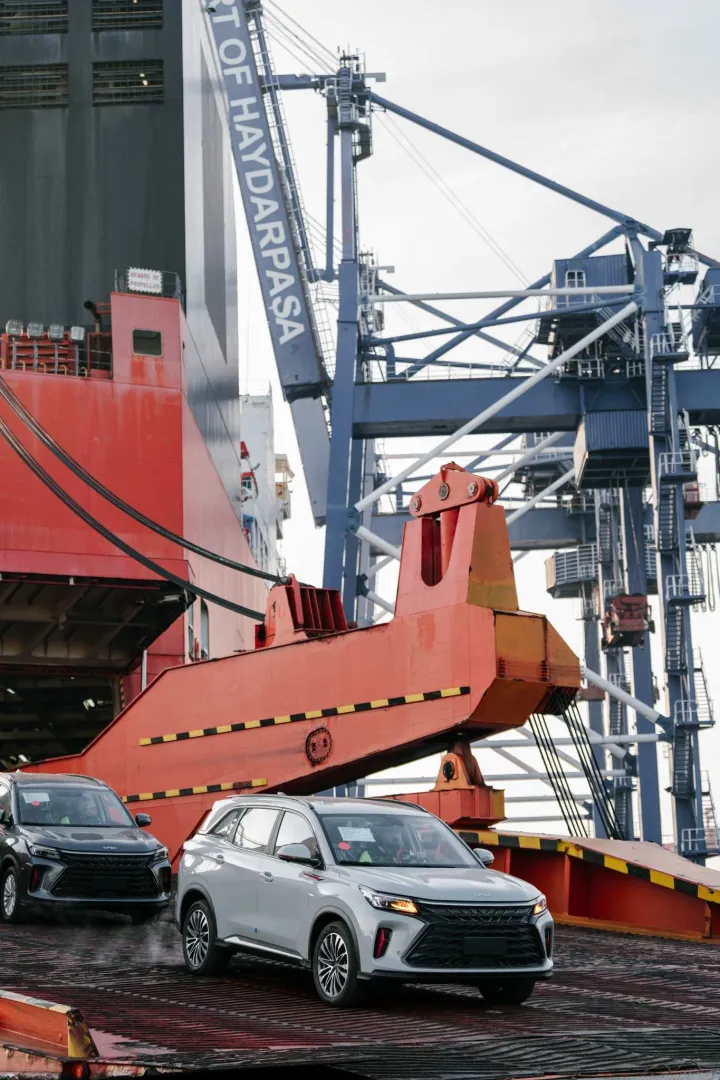
Conversely, Ro-Ro shipping (Roll-on/Roll-off) represents the most efficient protocol for functional, wheeled cargo. Vehicles are driven directly onto specialized, enclosed vessels and securely lashed to the deck infrastructure. By bypassing container stuffing and crane dependency, this method accelerates port turnaround times and offers a highly scalable solution for high-volume automotive logistics and heavy machinery transport.
Understanding Marine Insurance
Risk management is a non-negotiable component of international logistics. While maritime carriers maintain stringent safety protocols, transoceanic voyages are inherently exposed to unpredictable environmental variables and force majeure events.
It is crucial to understand that under international maritime law, a carrier's financial liability for cargo damage or loss is often strictly limited. Therefore, securing comprehensive marine insurance is imperative. Policies generally fall into two categories: Total Loss (covering the complete loss of the vessel or cargo) and All-Risk (providing broader coverage against physical damage during transit). Engaging with specialized marine insurance brokers ensures that high-value assets are adequately protected against potential supply chain disruptions.
Customs, Taxes, and Duties
Navigating the fiscal and regulatory landscape of the destination country requires thorough preliminary research. Importation protocols extend far beyond simply paying freight charges; local customs authorities impose specific tariffs, taxes, and technical compliance standards.
Commercial importers must calculate anticipated import duties, Value Added Tax (VAT), and potential luxury taxes based on the vehicle's assessed CIF (Cost, Insurance, and Freight) value. Furthermore, many jurisdictions enforce strict age limitations on imported vehicles and mandate rigorous emissions or safety standards. Ensuring that the transported assets comply with local homologation requirements prior to shipment prevents costly modifications, prolonged customs holds, or mandatory re-exportation.
Estimated Transit Times and Potential Delays
Supply chain forecasting relies heavily on predictable transit timelines. However, international maritime transport is influenced by multiple dynamic factors. The distance between the origin and destination ports dictates the baseline transit duration, but secondary variables play a significant role.
Port congestion, labor availability at terminals, complex customs clearance procedures, and severe meteorological conditions can all introduce deviations from standard routing. To optimize planning and inventory management, logistics coordinators should actively monitor the operational fleet schedule. Utilizing transparent and updated carrier itineraries allows businesses to align their downstream distribution operations with realistic vessel arrival projections.
The Costs of International Car Shipping
Budgeting for cross-border vehicle mobilization requires a comprehensive analysis of all involved operational expenditures. The baseline international car shipping cost is never a static figure; it is calculated through a matrix of logistical parameters.
Primary cost drivers include the physical dimensions and weight of the vehicle, the total nautical distance of the voyage, and the chosen transport methodology (Ro-Ro vs. Container). Secondary variables contributing to the total expenditure include origin and destination port handling fees, customs clearance agency fees, marine insurance premiums, and applicable import duties. Fluctuating global fuel surcharges (BAF) and currency exchange rates also continuously influence final pricing models.
Due to the complex, multi-variable nature of maritime logistics, generalized pricing structures often fail to reflect the reality of specific supply chain requirements. For accurate financial forecasting, detailed operational analysis is necessary. To receive a tailored logistical assessment and a precise freight quotation based on your exact routing and cargo specifications, contact UGR Lines to consult with our maritime transport specialists.